


SURF CULTURE
In most Australia, the ocean’s never really that far away. It’s early alarms, boards in the back of the car, and checking the wind before you check anything else. It’s the same stretch of coast you’ve surfed a hundred times and somehow it still feels different every day.
This issue leans into that. Not just the waves, but everything around them. The people who’ve built their lives on it, in their own way. Longboarders slowing things down, kiters chasing wind up and down the coast, photographers watching it all unfold from the edge of the lineup.
There’s no one way to do it. Some people stay local. Some don’t sit still. Some are trying to get better. Others are just trying to get one good wave before work.
Along the way, we’ve kept a few things simple. Where to go when you don’t feel like fighting for waves. How to read a forecast without overthinking it. What it actually looks like when you’re starting out and nothing’s quite working yet.
Because most of the time, it’s not about finding something new. It’s about showing up, figuring it out, and doing it again tomorrow.

It usually comes back to the same kind of places.
The ones that stopped trying to keep up a long time ago.
EDITOR'S LETTER

There is just something about surf culture. It doesn’t try too hard, it doesn’t need to prove anything, it just exists. It lives in the background of coastal towns, in the early morning checks, in that golden hour glow when the wind drops and the ocean cleans up. It is a feeling more than anything, and once you have been around it, you don’t really lose it.
For me, I spent most of my life on the Sunshine Coast, back when it was a whole lot quieter than it is now. Starting up in Marcoola, one street back from the beach, and at the time it felt like we had the place to ourselves. A solid 25km stretch of beach right there, no crowds, no pressure, just open coastline and whatever the ocean decided to serve up that day.
That was the routine. Wake up, check the surf. It did not matter if it was pumping or flat as a tack, you were still heading down. Sandy feet, salty air, and a full day ahead that never really had a plan. The beach was not just somewhere you went, it was where everything happened. Afternoon surfs that rolled into sunset, hanging with mates even when there was not a wave worth chasing, it never really mattered because it was never just about the surf.
We moved inland for a bit as well, out onto acreage in a smaller hinterland town, but nothing really changed. You were still only a quick 10 minutes from the beach and that pull was always there. It showed me pretty quickly that surf culture is not just tied to the coastline, it follows you. It is in the way you live, the way you think, the way your day naturally falls into place around tides, wind and light. Less about where you are, more about how you carry it.
Shaka’s are getting thrown around, no one is in a rush, and it all just clicks.
It is in the little things that most people would probably miss. The routines that no one really talks about, but everyone just does. Grom’s finally getting the thrill of digging up the river mouth to have an explosive afternoon of free waves on tap. Coffee spots filled with salty hair and sandy feet, post surf chats that go longer than they should, no one really watching the clock.
And it goes beyond that too, into the way these towns live and breathe. Heading over to a mate’s place to help build a skate ramp, which somehow turns into the go to house for parties all summer. Trying to find the highest hill you can find just to catch the sunset, or dragging yourself out early enough to watch that first light hit as the sun kisses the horizon. It is not organised, it is not planned, it just happens, and somehow everyone is on the same page without needing to say it.
That same culture has followed the surf everywhere…
Cabarita in Northern NSW is one that always stands out, with that headland wrapping around clean lines when it is on.
Hawks Nest up on the Central Coast has that quieter feel, a bit more tucked away, but still delivers.
Then you got 1770 and Agnes Water, where everything slows right down and the days seem to stretch on forever.
And on the other side of the country, Cottesloe, where I was born near Perth, and Margaret River, which brings a whole different level of raw coastline and energy. Completely different setups, but somehow all connected through the same underlying culture.
What is interesting is that even as these places grow, more people move in and things change, that culture does not disappear. It might shift slightly, it might get a little harder to spot at first, but it is still there. You will find it tucked away in coffee shops, in surf clubs, in those quiet surfing moments waiting in the line-up, having a chat with someone you have never met before but somehow feels familiar.
That is the thing about it, you do not need an introduction, you just get it.
And the best part is, you do not even need to be a surfer to be part of it. You can grab a board, or don’t, it does not really matter. Just being around it is enough. It pulls you in either way, makes you slow down a bit, breathe it in, and reminds you what a good day actually feels like.
Australia has this dialled. All the way around the coastline, it is there, strong as ever. You do not have to go looking too hard for it either. Just pick a town, head for the coast, and you will know exactly what I mean when you get there.
Just don’t forget to have your shaka’s ready.
- Ben

Hidden, Not Secret.
Not everything worth finding is hidden.Some places are just slightly harder to get to.
Or easier to overlook.Here are a few worth not driving past.

Hidden,
Not Secret
Not everything worth finding is hidden.Some places are just slightly harder to get to. Or easier to overlook. Here are a few worth not driving past.
THE ONE JUST PAST IT
Angourie Back Beach, NSW
📍 -29.4792, 153.3637
You’ll see the turnoff for Angourie Point. That’s where most people stop. Keep going.
The Spot
Back Beach sits just over the hill - a bit more exposed, a bit less polished. From the carpark, it doesn’t look like much. Which is usually the point.
What To Expect
Everyone’s chasing the same wave down the road.
This one gets left alone more often than it should.
On the right day, it’s clean enough. On the wrong day, it’s still surfable, just without the pressure of needing it to be perfect.
-
fewer people
-
more movement in the water
-
waves that don’t need to be perfect to be fun


THE WALK IN THAT FILTERS IT OUT
Sunshine Beach (Southern End), QLD
📍 -26.4062, 153.1095
It’s not far. Just far enough.
The Spot
Most people stop near the main access points. Walk south along the beach and it quickly thins out. Same stretch, same swell just less convenience.
What To Expect
The extra effort filters things out.
Not completely, just enough.
You’ll still get peaks, just without someone already sitting on them.
-
short walk
-
fewer crowds
-
more space to move
THE TIDE EVERYONE SKIPS
Jan Juc (Bird Rock End), VIC
📍 -38.3458, 144.2985
Most people wait for it to “turn on.”
This isn’t that window.
The Spot
Down toward Bird Rock, Jan Juc can look a bit ordinary on first check. But at the right tide it starts to line up better than expected.
What To Expect
It’s rarely the standout on the forecast.
Which is why it’s often quieter.
Give it a chance and you’ll usually find something worth staying for.
-
tide-dependent
-
less crowd than Bells side
-
waves that improve if you wait


THE WINDY ONE THAT STILL WORKS
Middleton Point, SA
📍 -35.5070, 138.7036
It’s not always clean.That’s kind of the deal.
The Spot
Middleton stretches wide and open, which means it picks up everything, wind included. But tucked along the point, there are sections that hold shape better than you’d expect.
What To Expect
You’re not chasing perfect conditions here.
You’re just making the most of what’s in front of you.
And more often than not, it works out.
-
some wind
-
long, workable sections
-
fewer people chasing perfection
The right spot helps. Knowing what to do with it is something else.
Style over everything
longboarding with declan Wyton
For some surfers, it’s about speed. For others, power. For Declan Wyton, it’s about timing.
Longboarding doesn’t force anything. It waits. It lines things up. And when it works, it looks easy enough to be misleading.
It’s less about chasing the best wave of the day, and more about knowing which one to leave alone. The rhythm is different. A little slower. A little more considered.
And if you spend enough time watching it, you start to realise it’s not really slower at all - just quieter.


Long Before the Tour
Declan didn’t grow up chasing a career in surfing. It started the same way it does for most people pushed into waves, figuring it out as he went.
“I got into surfing when I was about five,” he says. “My dad used to push me into waves for hours on end, even though he didn’t surf himself.”
Originally from Annandale in Sydney’s inner west, weekends quickly became all about Manly. It wasn’t long before surfing shifted from something to do into something that shaped everything else.
Joining the Manly Malibu Boardriders Club was the turning point. That’s where longboarding stuck.
From there, things built steadily rather than all at once. No sudden jump, no big moment where it all changed just time in the water and a gradual shift toward competing at a higher level.
Now, life runs at a slightly different pace. He’s competing on the World Longboard Tour while working as a firefighter, doing seasonal lifeguarding, and finishing a teaching degree.
“It’s a pretty full-on schedule, but I enjoy the balance. It keeps me switched on.”
It’s not the typical setup for a professional surfer, which is probably why it works. There’s something else to focus on. Something that keeps things grounded when the waves aren’t cooperating.
Surfing still sits at the centre of it all. The rest just fits around it.
The waves that shape it
North Steyne, Manly - Northern Beaches, NSW
North Steyne is home. It’s where most of the time gets spent the kind of wave you end up knowing without really trying to.
“It’s a stock standard kind of beach break,” he says. “But when it’s on, it’s honestly one of my favourite waves.”
There’s nothing overly polished about it, which is exactly why it works. It’s consistent, it’s there when you need it, and it’s where most of the real surfing happens. Not the highlight reel stuff just time in the water, over and over again.
Crescent Head - Mid North Coast, NSW
Crescent Head is something else entirely.
Long, peeling rights, a bit more room to move, and a lot more time on a wave. It’s the kind of place longboarding was built for.
“It’s such a classic longboard wave… a bit of a longboarder’s paradise,” he says. “We used to holiday there growing up, so there’s a lot of good memories tied to that place.”
And like most places that stick with you, it’s not just about what happens in the water.

“You can’t go past the bakery after a surf either.”

From Manly to the world stage
There’s no big turning point. Just a steady build.
Winning the Logger Pro in Noosa recently meant more than most.
“That one was really rewarding… I’ve struggled to get results there before, so to finally put it together felt pretty special.”
A Final at Bells Beach in 2023 stands out too, especially with family and friends watching from the cliff.
Then he finished fourth in the world last year. Quietly one of the bigger milestones, even if it doesn’t come with much noise.
“I’m feeling good going into this season and would love to come away with a world title. That’s the dream.”
No big declarations. Just a direction.

Connect
You can follow Declan at @declan_wyton, where he shares a mix of life on tour, free surfs, and the moments in between.
He’s also got a couple of short films in the works, set to drop across Instagram and YouTube soon.
And like most things in surfing, none of it happens alone with support from O’Neill, O’Donnell Surfboards, FCS, Rhino Laminating, Carve Eyewear, Chocolate Box Training, Recentre, Manly Malibu Boardriders Club, and, as he puts it, “of course, Mum and Dad.”

You spend enough time in the water, you start to think you’ve got it figured out. Then the wind gets involved and suddenly you’re learning again.
A Life Between Wind and Water:
Kitesurfing with Gabi
For some, kitesurfing is just a sport. Gabi built her life around it.
It didn’t start anywhere near the ocean. Born and raised in Vienna, about as landlocked as it gets, the dream of a life by the ocean was always there, just out of reach. Her room was covered in surf posters long before she’d ever stood on a board.
She followed the expected path at first. Corporate career, global cities, everything moving quickly and in the right direction, at least on paper.
Then a work trip to Bali changed it.
“I tried kitesurfing for the first time and that was it,” she says.
Not a gradual shift. Not a slow build. Just a clear decision to walk away from everything she’d spent years building. Most people thought it was a bad idea.


What it turns into
Within just over a year, she was competing on the World Tour, a path she followed for several successful seasons.
But along the way, it became clear that competition wasn’t what she was really chasing.
“Proving myself in front of judges that wasn’t what I left my corporate career for.”
What pulled her in was something else entirely: exploration, waves, and the freedom to move without a fixed plan.
That shift changed everything.
The travel became less about events and more about places - meaningful experiences and connections along the way. Remote coastlines, unfamiliar conditions, stretches of ocean where there’s no one else out, or no one has kited before.
By now, she’s travelled to over 85 countries, written hundreds of articles, and built a life that sits somewhere between kitesurfing, exploration, storytelling, and constant movement always following wind, swell, and the unknown.
The pull
The ocean isn’t just the setting. It’s the reason.
“It resets everything. Every time I come out of the water, things feel clearer and simpler again,” she says.
Wave riding, both kitesurfing and surfing is what keeps bringing her back. Not just for the physical side, but for the mental state it puts you in.
“You’re fully present. There’s no space for anything else. On a personal level, waves help me to push my limits, make me face fears, and teach me to grow; they humble me and fuel me endlessly.”
Out in more remote parts of Western Australia, where she now spends long stretches of time, the experience shifts again. Less distraction, less noise, and no one else to rely on.
Alone with wind and swell, it becomes a very raw and honest experience.
“There’s no margin for ego out there. Nature sets the rules, and you have to adapt.”
It’s not about pushing limits. It’s about understanding where they are.


The pull
Ask her for favourite spots, and you won’t get a straight answer. Not because there aren’t any just because that’s not really the point.
“Part of the magic is finding your own.”
Western Australia has become the constant. The northwest, raw and isolated. The southwest, consistent and shaped for waves. The south coast, still largely unexplored. Different conditions, same feeling - space, distance, and the sense that there’s always more to find.
“The more remote I go, the more connected I feel to nature, and to myself.”
The way into it
If you’re starting out, Gabi’s advice is simple. “For kitesurfing, take lessons. Learn properly. It makes all the difference in terms of safety and progression.”
But beyond that, when it comes to getting out there and exploring, don’t wait too long for things to line up perfectly.
“You don’t need the perfect setup or the perfect crew, just start.”
The bigger part is understanding where you are and what you’re stepping into. Preparation and respect are key.
“Leave the ego behind, the ocean and the environment will always be bigger than you.


Connect
You can follow along at @kite_gabi on instagram or @kitegabi on facebook, where she shares work from the water and the road.
Her films Wave of Life and The Art of Adapting explore the same idea in more depth - a life shaped less by plans, and more by where the wind and swell decide to take you.

The lifestyle pulls you in. Learning it properly is what keeps you there.
A better way to learn
Kitesurfing with athea kites
Most people don’t ease into kitesurfing. Some get dragged into it, literally.For Athea, it started with a kiting piggyback ride, holding on to her rider “like a koala” and screaming her way out into the ocean. That was enough. She booked lessons straight away. Fast forward a few years and she’s now based in windy Nelson Bay, teaching, travelling, and building a life around kiting, water and the community. Not bad for something she didn’t know existed four years ago.So what’s the hook? Athea says it’s about the incomparable “excitement” it brings; the feeling of freedom, time in wild places, pushing personal limits, and satisfaction of overcoming fears.
%20(1).png)
Don't skip this part
Most people don’t ease into kitesurfing. Some get dragged into it, literally.
For Athea, it started with a kiting piggyback ride, holding on to her rider “like a koala” and screaming her way out into the ocean. That was enough. She booked lessons straight away.
Fast forward a few years and she’s now based in windy Nelson Bay, teaching, travelling, and building a life around kiting, water and the community. Not bad for something she didn’t know existed four years ago.
So what’s the hook? Athea says it’s about the incomparable “excitement” it brings; the feeling of freedom, time in wild places, pushing personal limits, and satisfaction of overcoming fears.


This is where it changes
From beginner to sponsored in 3 years, Athea states progress isn’t random. It’s built.
“Progressing quickly is an art,” she says and most of it comes down to having a clear focus every time you go out.
Pick something small. Repeat it. Keep repeating it until it becomes second nature. Break moves down into chunks. Then bring them all together.
When you crash, step back and actually think about it.
“What went wrong? Where was the kite? Did I nose dive?”
It’s less about trying harder and more about understanding what happened.
Consistency matters more than perfect conditions. It’s about time and frequency on the water.
But not all the work happens on the water. Watch tutorials. Study them. Visualise the movement before you try it. Run through it slowly in your head — then do it again.
“At that point, you’ve already made the mistakes before you even get out there.”
It sounds simple. It works.
For YouTube resources to inspire, check out Kitesurf College, Steven Akkersdijk, and Get High with Mike.
The ocean sets the rules
Learn to read the elements.
Apps help - Windy, Wind Guru, WillyWeather, but even then, it’s about patterns more than numbers.
Seasons sometimes say more than forecasts. North-easterlies on the east coast usually mean warm, steady wind that builds through the day. Southerlies tend to bring storms, gusts, and a session that keeps changing its mind.
Then there’s where you actually go.
Offshore wind looks perfect, with butter flat water. It’s also how you might end up drifting further out than planned, unless a local fisherman is happy to rescue you.
“Offshore can be dangerous… if something goes wrong, you’ll be blown out to sea.”
Cross-onshore or on-shore is safe. Not always perfect with its choppy waters, but much smarter. That’s the trade.


Gear (And getting it right early)
There’s no shortage of gear options. What you pick will dictate how well you progress.
Start with the right type, something forgiving, stable, and built to help you learn.
All-rounder kites do exactly that. They don’t excel at one thing, but they don’t punish the mistakes.
The wrong setup, on the other hand, will slow you down fast.
“The worst thing you can do is buy the wrong gear for your riding, that’s when you can actually blame the equipment.”
It’s one of the few times that excuse holds up.
Still don’t know where to begin? An experienced kiter or local kite shop will know.

Connect
You can follow along at @athea_kites, where Athea shares tutorials, sessions, and the reality of learning properly.
If you’re keen to get started, Nelson Bay offers beginner-friendly spots and experienced instructors or for something bigger, she and her partner run kite trips through Escape Eco Adventures. It truely is the best way to fast-track your learning with the company of fun like-minded people.
She also gives a kind shoutout to her kite sponsors Core Kites and Mystic Boarding for turning her dreams into a reality.
Not everyone heads down there to surf. Some are just there to watch how it all plays out.
THE SPACE BETWEEN SETS
With Russel Ord
Some people shoot the ocean. Others spend enough time in it that the camera just becomes part of the process. For Russell Ord, it was never really about photography to begin with. That just came later.


where it started
Before any of this, life looked pretty different.
Sport was the focus early on especially rugby league. It was structured, competitive, and took up most of his time. The ocean was there, but more as a release than anything else.
“I grew up with sport at the centre of everything… but the ocean was always there in the background, pulling at me.”
Surfing with mates on weekends became the reset. Something quieter, less controlled.
Before photography, he was working as a firefighter, a job that doesn’t leave much room for hesitation.
“That job taught me a lot about pressure, risk, and staying calm when things can change quickly.”
Looking back, it’s the kind of experience that translates more than you’d expect.
Photography only entered the picture later, and not by design.
“I hurt my knee in the surf… instead of sitting around, I borrowed a film camera and started taking photos of friends.”
At first, it was just a way to stay connected to the ocean. Then it stopped being temporary.
A day in the swell
There’s no real routine to it.
Most days start the same - heading out alone, seeing what the ocean feels like rather than what it’s supposed to be doing.
“A typical shoot for me is often just heading off on my own and exploring… it’s not always about chasing a specific shot.”
There’s no guarantee of anything. Some days don’t give much back but that’s not really the point.
“What draws me to the ocean is how it makes me feel, with or without a camera… it’s a place where everything else falls away.”
That’s what keeps him coming back. Not the images - the space around them.


the way he works
There’s a tendency to rush it.
See something, shoot it, move on.
He does the opposite.
“Creatively, I like to sit and watch first. If you take the time to observe, you start to notice things you’d miss.”
It’s not about being first. It’s about being there long enough for something to line up.
Before the shutter clicks, it’s a simple check - not of the camera, but of the conditions.
“Mentally, it’s about knowing how much control I have in the ocean and being honest about my capabilities.”
There’s no pretending out there. You need to know your limits.
what actually matters
The outside stuff is easy to point to.
Awards, covers, recognition, they exist, but they’re not the reason for any of it.
“For me, awards, covers, and recognition are just the end of the journey… they’re not what drives it.”
The value sits somewhere else entirely.
“The real highlights have always been in the process… the people I’ve met, the places, the relationships built through it.”
That’s the part that stays.
The rest comes and goes.
Words of advice
If you’re looking to get into ocean photography, the camera is the least of it.
“The camera is the easy part. Being in the ocean is where the real skill begins. You need to know your limits and be honest about what you’re capable of, because that only comes with years and years of experience. The ocean is always more powerful than you, and it can change very quickly, so respect for it has to come first.”
It’s not dramatic. It’s just the reality of it.


Connect
Follow Russell at @russellordphoto for a look into his work in and around the ocean.
You can also explore more at www.russellordphoto.com
Some people wait for the moment.Others just show up early and let it find them.


life behind the lens
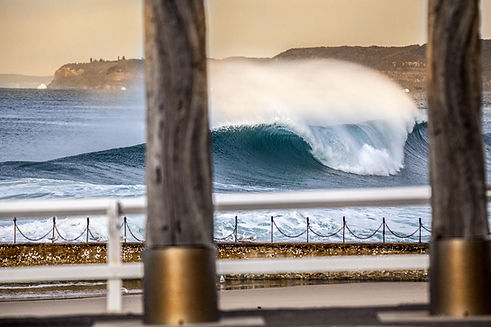
Today, Scott splits his work between brand photography for health, wellness, and lifestyle clients, and ocean photography. Empty waves, surfers in action, local Newcastle breaks, trips to Bali for sponsor shoots, or New Zealand’s raw coastlines, he’s there.
Some shots go into his print store, others are licensed to brands looking for authentic ocean imagery. “A day on the beach isn’t just about snapping the perfect wave,” he says. “It’s preparation, patience, timing, and sometimes just plain luck.”
A day shooting might start with checking conditions, getting the right angles, and waiting for the light to hit just right. Scott’s focus is always on being in the moment, capturing something fleeting most of us only see for a second.

Daily Salt
chasing waves with scott harrison
It starts before the sun’s fully up. Coffee in hand, camera ready, and the ocean just a block from home. Growing up in Newcastle, the beaches were always part of Scott’s world. Summers chasing waves, sunsets over the surf, the pull of the ocean constant even while life took him on a detour: university, Sydney, a sales and marketing career.
By 2014, he felt the drift away from what he was really meant to be doing. So he and his wife left city life behind and moved back to Newcastle. One autumn morning, Scott woke up to a sunrise that changed everything: perfect offshore waves, the sky on fire. He pulled out a camera he’d only ever used for travel photos and made a decision: “I was going to wake up early and go to the beach every morning and photograph waves!”
Even as a teen, Scott had been fascinated by surf movies. Pausing at every turn and air, he loved freezing the moment in time. That fascination finally found a home in the real world, in the waves, behind the lens.

scott's advice
Scott’s current setup: Canon R6 and R7, Sigma 100–400mm for surf, and Sigma 24–70mm for lifestyle shots.
His advice to aspiring photographers? “Don’t wait for perfect conditions to go and shoot. The more you shoot in less than ideal conditions, the more prepared you’ll be when it’s on.”
For anyone picking up a camera for the first time, Scott has compiled his years of lessons into an e-book and online course, covering everything from settings and composition to workflow. “Just shoot everything and anything all the time until that stuff is second nature,” he says.

the reward
For Scott, photography isn’t about the final image it’s about the experience. Early mornings, exploring coastlines, chasing light and waves, coffee on the sand as the sun rises. “The images are the bonus,” he says. “The real reward is being fully present in a world you love.”

Connect
Instagram: @daily_salt
Prints, course, presets: www.dailysalt.com.au
Podcast: Daily Salt on YouTube
Watching is one thing,
figuring out what's actually going on is another
%20(1).png)
Most people start with the swell. That’s usually the mistake. A good forecast isn’t about finding the biggest number. It’s about figuring out what will actually work where you are.
%20copy%202.png)
Wind decides whether it’s surfable or not.
Clean offshore winds = better shape
Onshore winds = messy, blown out
If the wind’s wrong, it doesn’t matter how good everything else looks.
Check:
-
direction (offshore vs onshore)
-
strength (light is always better)
If it’s offshore and light, you’re already halfway there.
%20copy%203.png)
Tide changes how the wave breaks.
Some spots need:
-
low tide to start working
-
others need mid or high to clean up
-
If you don’t know the spot, aim for:
mid tide = safest bet
The key isn’t the exact number it’s knowing the window when things line up.
%20copy.png)
This is where most people jump straight to but it only matters once the other two line up.
Look at:
-
size (how big it actually is)
-
direction (which beaches will pick it up)
-
period (how much power it has)
.png)
You don’t need ten different tabs open.
Most people check the same few.

Surfline
Good for a quick read and cams

Windy
Better for understanding what the wind’s actually doing

Willy Weather
Simple tide and wind check
Knowing when to get in helps.
Knowing what to do when you're in is what keeps you coming back.

more than just a surf lesson
With Surf Camp Down Under
It usually starts the same way. A board, a bit of instruction, and a wave that may or may not go to plan. But for most people who end up at Surf Camp Down Under, that’s not really what they take away.
Based in Yamba on the NSW north coast, it’s technically a surf school. But it doesn’t feel like one in the way people expect. There’s less focus on ticking off milestones, more on actually enjoying being in the water and understanding why people keep coming back to it.
The goal isn’t just to get you standing up. It’s to get you comfortable enough to stay.


How it started
Surf Camp Down Under began fairly simply. Shayne and his wife Courtney started out working alongside local a backpackers’ in Yamba, running surf lessons for travellers passing through.
Short stays. Quick introductions. But over time, something shifted. There was an opportunity to build something more consistent, not just for visitors, but for the people already living there. Families, kids, locals who wanted more than a one-off experience.
So they leaned into it. What started as a stopover activity slowly turned into something that stuck around.
What it actually looks like
This is where it becomes a bit clearer. It’s not one program or one pathway, it’s a mix of sessions built around different people and different reasons for showing up.
There are early morning grom squads before school. Three-day programs for kids just getting into it. Women’s sessions and retreats. High-performance weekends for those looking to push things further.
Then there’s the simple version, private or group lessons, no pressure, just time in the water.
They’re also building out corporate retreats, think Less boardroom, more ocean. The idea is still the same: get people out of their usual routine and into something a bit more real.
You don’t have to fit into it. You just pick the part that makes sense and start there.


Why it works
The difference is in how it feels. “We’re not just a surf school, we’re a community.” It’s the kind of line that gets thrown around a lot. But here, it actually holds up.
Yamba and Angourie have a lot of people who’ve moved away from somewhere else, family, friends, whatever they left behind to be closer to the coast. That makes connection matter more than usual. Over time, the regulars stop feeling like clients. People stick around after sessions. They come back. They bring someone else with them.
It starts to feel less like something you booked, and more like something you’re part of.
That’s the part you don’t really see when you first sign up.

Connect
You can find more at surfcampdownunder.com or follow along at @surfcamp_downunder.
Or just head to Yamba and see what it turns into.
More often than not, it's less about the surf and more about the scene around it.

noosa festival of surfing

Where flow comes first
Not every surf event needs to feel serious
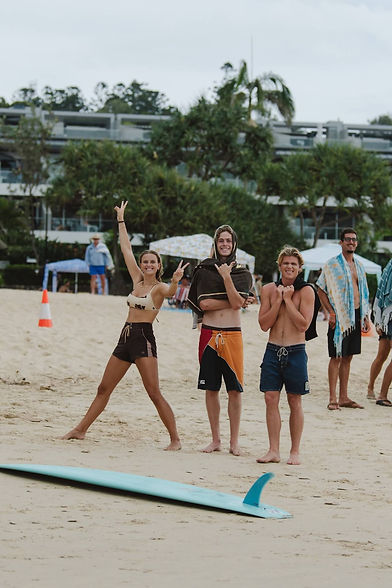
Noosa proves that pretty quickly.
For ten days each year, the usual rules soften a bit less about forcing turns, more about letting waves do what they’re already trying to do. Style over urgency. Flow over noise.
It’s competitive. Just not in a way that feels like it’s trying too hard.
What it really is
The Noosa Festival of Surfing isn’t built around pressure.
It’s built around the idea that surfing can still be fun, even when there’s a jersey involved. Longboarding sits at the centre, but it’s less about one discipline and more about how you approach it.
You’ll see world champs sharing waves with first-timers. Same lineup, same sections - just very different levels of commitment and coordination.
Some make it look easy.
Some make it look like they’re trying something new mid-wave.
Both belong there.
What you'll find there
There’s a lot going on, but none of it feels crowded.
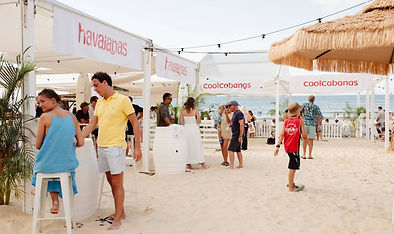
Heats run across everything - pro longboarding, nose riding, juniors, over-50s alongside sessions that don’t quite fit into a results sheet. Crafternoon, the Old Mal, team events that lean more toward a shared surf than a final.
And once you’re off the sand, it doesn’t really stop.
There’s music most of the day, a licensed pop-up beach bar (which tends to do a steady trade), and a mix of brand setups, films, art, and the kind of conversations that start about surfboards and end somewhere else entirely.
You can spend the whole day there without trying too hard.


a word from the creators
It started in 1992 with the Noosa Malibu Club.
No big strategy behind it, just a format that made sense for the waves and the people already surfing them.
By 1996, Phil Jarratt Communications had taken it on, helping shape it into something bigger. Over time, it’s grown into one of the world’s largest celebrations of surf culture, built across ten days.
Since 2019, World Surfaris Events and Event Generals have continued to evolve the festival — keeping it inclusive, progressive, and true to what it’s always been about.
It’s never really been built by one group alone.
Surfers, local businesses, sponsors, council, and the wider community have all played a part in shaping what it is now.
Noosa has its own way of doing things.
The waves are long, clean, and don’t reward rushing. If you try to force it, they tend to let you know fairly quickly.
That carries through the whole event.
There’s competition, sure but there’s also respect. Shared waves. Good energy. People hanging around long after their heat’s done, just to watch someone else get a better one.
Style still matters here.
Not as a throwback.
Just as how it’s done.


Connect
You can find more at noosafestivalofsurfing.com or follow along at @noosa_festival_of_surfing.
It runs each March.
All images by Melissa Hoareau
It doesn't take much to get out there but saving a buck where you can, can make all the difference.

gear discounts


SMELLY BALLS
REUSABLE AIR FRESHENERS THAT TRAVEL WELL
Say goodbye to single-use car fresheners. Smelly Balls are reusable, refillable, and made for the long haul. Perfect for cars, campers, tents, or any cosy corner. Just add your favourite scent, hang them up, and refresh whenever the mood strikes.
Crafted from premium felt and backed by a mission to support women workers in Nepal, they smell good, look good, and do good. Roadtrip essential? Absolutely.
15% OFF EVERYTHING


FLOATABLES
REDEFINING LIFE ON THE WATER
Floatables is all about levelling up your time on the water. Think inflatable docks, water hammocks, and wellness ice baths designed for adventure, relaxation, and serious durability. Proudly Australian-owned, we create premium, multi-purpose gear built for sun-soaked days, crystal-clear dips, and unforgettable moments. This isn’t just gear—it’s a lifestyle.
10% OFF SITEWIDE


MOGU OUTDOORS
CAMP SMARTER. ROAM FREER.
At Mogu Outdoors, we make smart, easy-to-use gear that takes the hassle out of camping, so you can get straight to the good stuff. Cooking, exploring, and kicking back under the stars. Designed in Australia for adventure-lovers everywhere, our gear keeps things simple, stylish, and built to last.
From space-saving kitchen kits to rugged tool bags and seriously comfy sleeping gear, everything we make is about improving your outdoor setup without overcomplicating it. Less faff, more freedom. Because when your gear works as hard as you do, the only thing left to focus on is the adventure.
10% OFF SITEWIDE

ROAMING FOLK
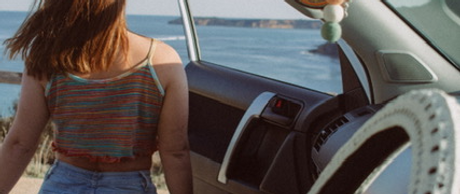
Roaming Folk creates handcrafted crochet car seat and steering wheel covers that bring bohemian charm to every drive. Designed in Australia and handmade by skilled Indonesian artisans, each piece is a one-of-a-kind blend of comfort, style, and craftsmanship - perfect for those who roam with intention.
15% OFF ALL PRODUCTS



Roam Gear
We're a passionate Aussie brand with everything you need for off-grid adventures. From premium 12-volt solar gear and accessories to camping essentials, we're your one-stop shop to hit the road. With years of industry experience, we offer the equipment and expert advice to help you live the #roamlife. Get ready to roam and explore our range of outdoor gear today!
15% OFF SIDEWIDE


BOK BEACH LIFE
ENDLESS SUMMER ESSENTIALS
Bok Beach Life is all about good vibes, great design, and gear that makes beach days better. From sand-free towels made with recycled plastic to laid-back essentials built for sunny days, we blend sustainability with style, so you can enjoy the coast while helping protect it.
20% OFF ENTIRE ORDER


BARKIN BOARDS
Barkin Boards was born from one simple truth: surfboards shouldn’t cost a fortune. We cut out the middlemen, source from the same factories as the big brands, and pass the savings straight to you. Same quality, better prices, because surfing should be fun, not financially painful. Woof.
10% OFF MINI MALS


VANILLA MOZI
The innovative Vanilla Mozi Outdoor range includes the award winning Body Cream, Soy Wax Candles and Soy Wax Melts in a Vanilla & Spearmint scent. Suitable for babies and highly sensitive skin, the trending products are natural, organic and vegan. They are also free from palm oil and parabens.
15% OFF SELECT PRODUCTS

%20(2).png)
ohana pups
Ohana Pups crafts consciously made goods for beach-loving dogs and their owners. Inspired by a love of coastal living, their bestselling leather collars are handmade with non-toxic tanning, natural cowrie shells, and premium brass - built to last through countless golden adventures.
10% OFF SITEWIDE


WIZARD FIREPITS
Wizard Fire Pits creates premium smokeless fire pits for people who love entertaining outdoors. Wizard Fire Pits are sleek, stainless steel, and engineered for high performance with little to no smoke. From backyard hangouts to romantic nights under the stars, we make fire simple, stunning, and smoke-free.
10% OFF SELECT PRODUCTS
We're all about giving back to the legends who support us. So we've got a massive gift for you!
Subscribe completely free and you’ll instantly unlock our exclusive Roam Legend Membership and get discounts on over 4,000 adventure experiences!
here's what you get:
epic discounts
Adventure experiences , cool stays, 4x4 accessories, camping gear, surfboards, beach gear, even mosquito repellent and dog accessories!
Win
cool Sh*T!
Enter every giveaway, every month.
Automatic entry to every competition!
And it's free!


You get used to the routine.
Looking after the place becomes part of it.
IT DOESN'T TAKE MUCH...
Take
For the sea
3

WHERE IT STARTED
Take 3 for the Sea didn’t begin as a campaign. It started with a simple idea: every time you leave a beach, waterway, campsite, or trail, take three pieces of rubbish with you. That’s it.
Founded in 2009 on the Central Coast of New South Wales by Tim Silverwood, Roberta Dixon-Valk and Amanda Marechal, the idea wasn’t to overwhelm people with the scale of the problem, it was to make doing something about it feel achievable.
Small action. Repeated often.


WHY IT WORKS
On its own, three pieces doesn’t sound like much.
But multiplied across thousands, then millions of people, it starts to add up.
More than 60 million pieces of rubbish have been removed by people taking part. Over a million students have been educated through the program. Surfers, campers, hikers, and travellers all doing the same thing, wherever they happen to be.
Not because they have to. Because it makes sense.
The simplicity is what makes it stick. You don’t need a plan, or equipment, or a clean-up day. You just do it when you’re already there.
THE WAY WE MOVE THROUGH IT
For people who spend time outdoors, it’s not a big shift. You’re already out there chasing waves, setting up camp, walking tracks that feel a long way from everything else. The places that feel untouched are usually the ones that stay with you.
And they stay that way because people look after them.
Take 3 fits into that without changing the experience. It doesn’t slow anything down or turn it into a task. It just becomes part of the way you leave.
There’s a bigger conversation behind it too about reducing plastic, about where it comes from, about how it ends up where it shouldn’t. But it doesn’t start there.
It starts with something simple.


Connect
That’s really all it is.
Three pieces of rubbish.
Each time you leave.
Not enough to feel like work.
Enough to make a difference.
You can follow along at @take3forthesea or find more at take3.org.
Or just start where you are.


What to Expect From Your First Few Surfs
It’s not going to look good. That’s the starting point. Everyone thinks they’ll pick it up quickly. Most don’t. You’ll fall off. Miss waves. Paddle harder than you expected. Spend more time getting back out than actually riding anything.
That’s normal.

Start with the right board
This is where most people get it wrong early. You’re not buying a shortboard and figuring it out. That comes later.
Start with something bigger:
-
softboards (foam boards)
-
longboards
-
anything with volume
They’re more stable, easier to paddle, and actually give you a chance to catch waves. The wrong board won’t make you look better.
It’ll just make it harder.
Get Comfortable First
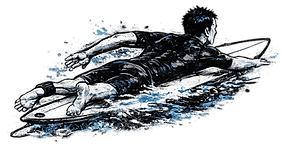
Before worrying about standing up, just get used to being in the water.
-
learn how to paddle
-
learn how to get through waves
-
get used to your board moving under you
Catching waves comes after that. You don’t need to rush it.
Everyone looks like a kook
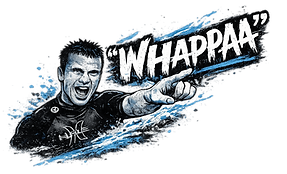
No way around it. Everyone looks awkward at the start. Everyone falls. Everyone gets in the way at some point.
The difference is:
-
some people stick with it
-
some don’t
No one in the water cares as much as you think they do.

The simple approach
If you want to make it easier:
take a lesson early
go when it’s small
use a bigger board
surf less crowded spots
just keep showing up
It’s harder than it looks at the start. But it’s also simpler than people make it.
Get the basics right, don’t rush it, and give it time.
You’ll get there.
that's a wrap, legends
This one was a reminder that surf culture isn’t just about what happens in the water.
It’s the early coffees, the carparks, the check that turns into a chat. The sessions that don’t quite go to plan but are worth it anyway. The same faces, the same stretches of coast, and the small routines that somehow become part of your day without you thinking about it too much.
Some are chasing waves. Some are chasing wind. Others just keep turning up because it’s what they do. No big reason, no perfect setup - just time spent around something that keeps pulling you back.
So whether you’re in the water, on the sand, or just passing through… stick around a little longer.
We’ll see you down there.
Unlock the Legend: Get More
You read the stories. Now live the life.
Subscribe to Roam Legend COMPLETELY FREE and unlock exclusive discounts up to 20% off our partner brands. Get serious savings on everything epic, from experiences and camping gear to 4x4 accessories, and score automatic entry into every giveaway.